drawing words and writing pictures pdf
Article Plan: Drawing Words and Writing Pictures (PDF Focus)
This PDF tutorial explores the powerful synergy between visual and textual storytelling. It’s designed for both classroom settings and individual study, offering a unique approach to narrative construction.
The focus isn’t on mastering artistic skill, but on enhancing drawings with compelling writing and techniques. Students will learn to build worlds, characters, and dynamic compositions.
Assignments, further reading, and projects accompany each lesson, guiding learners through sequential art, lettering, inking, and ultimately, creating their own mini-comics for publication.
Visual narrative, at its core, is the art of storytelling through images – often combined with text. This isn’t simply illustration; it’s a deliberate sequence of visuals designed to convey a plot, develop characters, and evoke emotion, much like traditional literature. The PDF tutorial centers on understanding this fundamental principle, moving beyond simply drawing pictures to constructing narratives.
Historically, humans have communicated through images long before the written word. From cave paintings to hieroglyphics, visual storytelling is deeply ingrained in our history. This tutorial acknowledges that legacy while focusing on modern applications, particularly within the realm of comics and sequential art. It’s about recognizing that a picture isn’t just worth a thousand words; it is a form of language itself.
The approach taken here isn’t about technical drawing prowess, but about leveraging visual elements to amplify a story. We’ll explore how composition, character design, and even simple lines can communicate volumes. The goal is to empower creators – whether experienced artists or beginners – to think narratively about their visuals, and to effectively merge words and images into a cohesive and compelling whole.
The Synergy of Words and Images
The true power of visual narrative lies not in words or images, but in their harmonious interplay. This PDF tutorial emphasizes that synergy, exploring how text and visuals can complement, enhance, and even subvert each other to create a richer storytelling experience. It’s a delicate balance – words can provide context and internal monologue, while images offer immediate emotional impact and visual detail.
Often, the most effective storytelling occurs when words and images work in tandem, rather than redundancy. A well-placed caption shouldn’t simply describe what’s already visible; it should add nuance, foreshadow events, or reveal a character’s inner thoughts. Similarly, visuals shouldn’t merely illustrate the text; they should expand upon it, offering a unique perspective.
This section will delve into techniques for achieving this synergy, examining how layout, lettering style, and visual metaphor can all contribute to a cohesive narrative. We’ll also consider examples from masters of the form, like Maira Kalman, to illustrate how a thoughtful combination of words and images can elevate a story to new heights. The aim is to move beyond simple illustration and embrace the full potential of visual communication.
Sequential Art: From Single Pictures to Comic Strips
Sequential art, at its core, is storytelling through a deliberate sequence of images. This PDF tutorial bridges the gap between isolated illustrations and the dynamic world of comics, demonstrating how a series of pictures can convey narrative, emotion, and even the passage of time. We begin by examining how a single, powerful image can hint at a larger story, then progress to arranging multiple images to build a coherent sequence.
The transition from a single picture to a comic strip isn’t merely about adding panels; it’s about understanding pacing and visual flow. How do you guide the reader’s eye across the page? How do you use panel size and shape to emphasize key moments? These are crucial questions we’ll address.
A key component of this section is the introduction of thumbnail sketches. These small, rough drawings are essential for planning panel layouts and visualizing the overall flow of a story before committing to detailed artwork. Students will learn to use thumbnails to experiment with composition and ensure a clear, engaging narrative structure. This foundational skill is vital for any aspiring comic creator.
Understanding Thumbnail Sketches
Thumbnail sketches are the bedrock of effective sequential art, serving as rapid visual blueprints for your comic’s narrative flow. This section of the PDF tutorial dives deep into their creation and application, emphasizing that they aren’t about polished artwork, but about quickly exploring compositional ideas.
Think of thumbnails as miniature storyboards. They allow you to experiment with panel layouts, character positioning, and overall page design without investing significant time in detailed drawings. We’ll cover techniques for simplifying complex scenes into their essential elements, focusing on shapes and silhouettes to convey action and emotion.
Students will learn to use thumbnails to address key storytelling questions: Where will the reader’s eye go first? How can panel size and shape emphasize important moments? How can we create a dynamic sense of movement and pacing? Through practical exercises, you’ll master the art of translating your story ideas into concise, effective visual plans. These sketches are the foundation upon which compelling comics are built.
Classroom & Individual Tutorial Applications
This PDF resource is deliberately versatile, designed for seamless integration into both formal classroom environments and self-directed learning. For educators, the structured lessons, homework assignments, and extra credit projects provide a comprehensive curriculum for teaching visual narrative techniques.
The material is adaptable to various skill levels, from introductory art classes to more advanced workshops focusing on comic creation and storytelling. Teachers will find suggestions for facilitating group discussions, critiques, and collaborative projects.
For individual learners, the tutorial offers a self-paced learning experience. Each lesson builds upon the previous one, providing a clear pathway to mastering the core principles of drawing words and writing pictures. The included exercises and further reading recommendations encourage independent exploration and skill development. The goal is to empower students to confidently create their own comics, regardless of their prior artistic experience, focusing on narrative dimension and impactful visual communication.
Penciling Strategies for Dimensionality
This section of the PDF moves beyond simply drawing and focuses on imbuing illustrations with depth and believability. It’s not about becoming a master artist, but about using penciling techniques to give dimension to your storytelling.
The core principle revolves around understanding how to translate three-dimensional forms onto a two-dimensional surface. This involves exploring techniques like shading, line weight variation, and perspective – all geared towards enhancing the narrative impact of the image.
A key exercise involves utilizing “action and reaction lines” in composition. For example, visualizing the arc of a projectile as an action line, and a character’s startled pose as a reaction line, establishes dynamic flow. The PDF emphasizes that these lines dictate the basic energy and direction of the drawing. Students will learn to build upon these foundational lines to create compelling and visually engaging scenes, ultimately strengthening the story being told.
Action and Reaction Lines in Composition
This core concept, detailed within the PDF, provides a foundational approach to dynamic composition. It’s about understanding that every visual element should contribute to the narrative flow, and these lines are the key to achieving that.
Action lines represent movement, force, or trajectory – the cause of an event. Think of a speeding ball, a swinging sword, or a character leaping forward. Reaction lines, conversely, depict the effect of that action – a character’s startled pose, a shattered window, or a gust of wind.
The PDF stresses that starting with these two lines immediately establishes the basic energy of a drawing. For instance, a ball crashing through a window would begin with the arc of its trajectory (action) and a line defining a person’s alarmed posture (reaction). These aren’t literal lines that remain in the final artwork, but rather guiding principles for building a compelling and visually engaging composition. Mastering this technique allows artists to inject dynamism and narrative clarity into their work.

Lettering Techniques in Comics
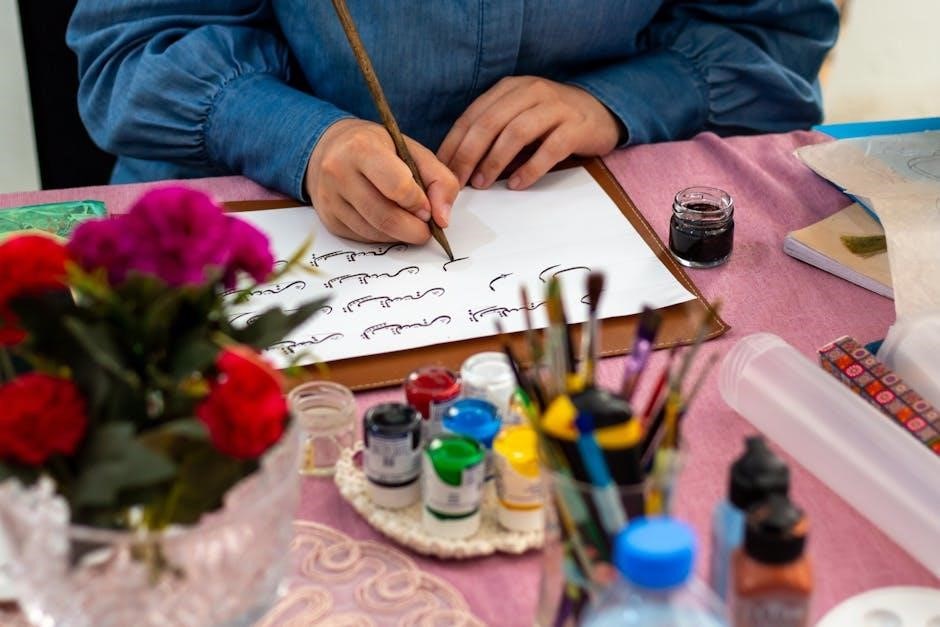
The PDF dedicates significant attention to lettering, recognizing it as far more than simply adding text to panels. It’s a crucial element of visual storytelling, capable of conveying tone, emotion, and even sound effects with remarkable impact.
This section moves beyond basic typography, exploring how letterforms themselves can enhance the narrative. Different fonts, sizes, and styles can differentiate characters’ voices, emphasize key words, or create a sense of urgency or calm. The PDF details techniques for balloon construction, ensuring clarity and readability while maintaining a dynamic visual flow.
Students will learn to integrate lettering seamlessly into the artwork, considering its placement, shape, and relationship to the surrounding imagery. Emphasis is placed on the importance of sound effects (onomatopoeia), demonstrating how to visually represent sounds in a way that is both impactful and aesthetically pleasing. Ultimately, the goal is to transform text from a supplementary element into an integral part of the comic’s visual language.
Inking Techniques: Pens and Brushes

This section of the PDF delves into the art of inking, a pivotal stage in bringing comic artwork to life. It emphasizes that inking isn’t merely about tracing pencil lines, but about adding depth, texture, and a distinct visual style.
The tutorial explores the diverse range of tools available, from fine-liner pens to traditional brushes, detailing the unique qualities and applications of each. Students will learn how to control line weight to create contrast, define forms, and guide the reader’s eye. Techniques like cross-hatching, stippling, and dry brushing are demonstrated, offering a variety of methods for achieving different effects.
The PDF stresses the importance of understanding how ink interacts with different paper surfaces, and provides guidance on selecting the appropriate materials. It also covers techniques for creating solid blacks, rendering shadows, and adding subtle details. The aim is to empower artists to confidently utilize pens and brushes to elevate their artwork and imbue it with personality.
Panel Transitions: Guiding the Reader’s Eye
This section of the PDF focuses on a crucial, often overlooked aspect of comic storytelling: panel transitions. It explains how the spaces between panels are just as important as the panels themselves in conveying narrative flow and pacing.
The tutorial introduces different types of transitions, categorized by how they relate successive images. These include moment-to-moment, action-to-action, subject-to-subject, scene-to-scene, aspect-to-aspect, and non-sequitur transitions, each creating a distinct effect on the reader.
Students will learn how to strategically employ these transitions to control the speed of the narrative, build suspense, and create emotional impact. The PDF emphasizes that effective transitions aren’t simply about showing what happens next, but about suggesting what happens in between. It provides practical exercises to help artists master this skill, ensuring a smooth and engaging reading experience for their audience.
One-Page Comic Creation
This section of the PDF provides a focused, practical exercise: crafting a complete comic story within the confines of a single page. It’s designed to solidify the principles learned in previous chapters – panel composition, lettering, transitions, and visual storytelling – into a cohesive whole.
The tutorial guides students through the entire process, from brainstorming initial concepts and developing a concise narrative arc to sketching thumbnails and finalizing the artwork. Emphasis is placed on efficient storytelling; conveying a clear beginning, middle, and end within limited space.
Students are encouraged to experiment with different panel layouts and transition types to maximize impact. The PDF stresses the importance of strong visual communication, relying on imagery to carry the story as much as possible. This exercise serves as a stepping stone towards longer-form comic projects, building confidence and honing essential skills for publication.
Developing Narrative Arcs
This section of the PDF delves into the core of compelling storytelling: constructing a satisfying narrative arc within a comic format. It moves beyond individual panels and pages, focusing on the overall flow and emotional impact of a story.
The tutorial explores classic narrative structures – introduction, rising action, climax, falling action, and resolution – adapting them specifically for visual storytelling. Students learn to identify key plot points and build tension effectively through pacing and visual cues.
Emphasis is placed on character development as integral to the narrative arc. How characters react to challenges and evolve throughout the story is crucial. The PDF encourages students to consider thematic elements and how they can be woven into the narrative to create a deeper, more resonant experience for the reader. Assignments focus on outlining stories and creating storyboards to visualize the arc before committing to final artwork.
Character Design for Visual Storytelling
This section of the PDF focuses on creating characters that are not only visually appealing but also effectively communicate personality, motivation, and emotional state. It moves beyond simple aesthetics, emphasizing how design choices contribute to the narrative.
Students will learn to utilize visual shorthand – body language, facial expressions, clothing, and accessories – to instantly convey information about a character to the reader. The tutorial stresses the importance of silhouette and how a strong, recognizable shape can make a character memorable.
The PDF explores techniques for designing characters that reflect their roles within the story, considering archetypes and subverting expectations. Assignments involve character sketches, mood boards, and written character profiles to develop a holistic understanding. Emphasis is placed on consistency in design to maintain clarity and avoid confusing the audience throughout the comic.
Panel Composition: Layout and Flow
This section of the PDF delves into the art of arranging panels on the page to guide the reader’s eye and control the pacing of the story. It’s about more than just aesthetics; it’s about visual storytelling and creating a dynamic reading experience.
Students will explore various panel layouts – traditional grids, splash pages, irregular shapes – and learn how each affects the narrative’s rhythm. The tutorial emphasizes the use of negative space, gutters, and panel size to create emphasis and build tension.
The PDF covers techniques for establishing clear visual flow, ensuring the reader understands the sequence of events. Assignments involve analyzing existing comic pages, experimenting with different layouts, and creating thumbnails to plan panel arrangements. Understanding how to direct the reader’s gaze is crucial, and this section provides practical exercises to develop that skill.
World-Building in Comics

This section of the PDF focuses on crafting believable and immersive settings for your stories. It moves beyond simply drawing backgrounds, emphasizing the importance of consistent visual rules and a cohesive aesthetic.
Students will learn how to develop a world’s history, culture, and geography, and how to visually represent these elements through architecture, clothing, and environmental details. The tutorial stresses that world-building isn’t just about fantasy or science fiction; even realistic stories benefit from a well-defined setting.
The PDF explores techniques for establishing a sense of place, using visual cues to convey atmosphere and mood. Assignments involve creating world-building bibles, designing maps, and sketching key locations. Consistency is key, and the section provides guidance on maintaining a unified visual style throughout your comic. It’s about making the world feel real, even if it’s entirely imagined.
Advanced Brush Techniques
This section of the PDF delves into sophisticated inking methods, building upon the foundational techniques previously covered. It’s geared towards students seeking to elevate their artwork with nuanced line work and dynamic textures.

The tutorial explores various brush types, their unique properties, and how to exploit them for different effects. Students will learn techniques like varying line weight for emphasis, creating cross-hatching for shading, and utilizing dry brush for textured surfaces.
Emphasis is placed on controlling ink flow and brush pressure, achieving clean lines, and avoiding common pitfalls. Assignments involve replicating master inker’s styles and experimenting with different brush combinations. The goal is to move beyond simply outlining shapes, and to use the brush as a tool for expressive storytelling. This section isn’t about perfection, but about developing a personal and distinctive inking style.
Comic Reproduction Methods
This section of the PDF focuses on bringing finished comic artwork into a reproducible format, bridging the gap between original art and a shareable product. It acknowledges the shift from traditional methods to digital workflows, offering guidance for both.
Traditional techniques covered include stat copying and screen printing, outlining their advantages and limitations. However, the primary emphasis is on digital reproduction methods, such as scanning, image editing, and preparing files for print or online publication.
Students will learn about resolution, color modes, and file formats, ensuring optimal quality for different output methods. The tutorial also addresses the importance of proper image cleanup and retouching, removing blemishes and enhancing clarity. Assignments involve preparing artwork for various platforms – from self-publishing to submitting to potential publishers. The aim is to empower creators to effectively disseminate their visual narratives.
Homework Assignments & Exercises
Each lesson within this PDF is reinforced by practical homework assignments and exercises, designed to solidify understanding and encourage creative exploration. These aren’t simply about replicating techniques, but about applying them to original ideas.
Assignments range from quick thumbnailing exercises to more substantial projects, like developing a short comic strip or designing a character sheet. Emphasis is placed on experimentation with panel layouts, lettering styles, and inking techniques.
Extra credit projects offer opportunities for deeper engagement, such as creating a fully realized one-page comic or adapting a short story into a visual narrative. The goal is to foster a habit of consistent practice and critical self-assessment. Students are encouraged to share their work for constructive feedback, building a supportive learning community. These exercises are crucial for translating theoretical knowledge into tangible skills.
Further Reading Recommendations
To expand your understanding of visual narrative and inspire your own work, this PDF recommends several key texts. Exploring the works of artists like Maira Kalman is highly encouraged; her unique blend of illustration and storytelling offers a compelling model.
Delving into the “Microscripts” of Robert Walser provides insight into concise, impactful visual communication. Beyond these specific artists, consider exploring classic comic theory texts, focusing on panel composition and sequential art principles.
Resources on lettering and typography are also invaluable, as effective text integration is crucial. Further reading extends to books on character design, world-building, and the history of comics. These recommendations aim to provide a broad foundation for continued learning and creative development, fostering a deeper appreciation for the art form and its possibilities.
Mini-Comics and Publication
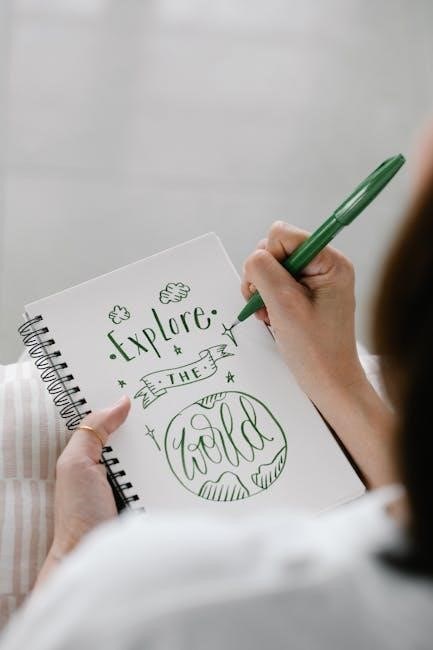
This PDF culminates in the practical application of learned skills: creating your own mini-comics. The process encourages experimentation with narrative arcs, panel composition, and character development, all within a condensed format.
Students are guided through the steps of planning, penciling, inking, and lettering a complete short comic. Emphasis is placed on efficient storytelling and maximizing impact with limited space.
Beyond creation, this section explores avenues for publication. Options range from self-publishing and online platforms to submitting work to independent comic anthologies. Understanding basic reproduction methods – scanning, digital editing, and printing – is also covered. The goal is to empower creators to share their stories and navigate the world of independent comics publishing, fostering a sense of agency and accomplishment.
Inspiration & Examples: Maira Kalman & Robert Walser
This section delves into the work of two distinct artists who masterfully blend words and images: Maira Kalman and Robert Walser; Kalman’s illustrated books demonstrate a unique approach to visual narrative, combining whimsical illustrations with poetic text to explore personal experiences and observations.
Her work serves as a powerful example of how images can enhance and deepen the meaning of words, and vice versa. In contrast, Robert Walser’s “Microscripts” – tiny, handwritten stories often accompanied by minimal drawings – showcase a different form of integration.
Walser’s work highlights the power of suggestion and the beauty of simplicity. These examples are presented not as models to imitate, but as sources of inspiration, encouraging students to find their own unique voice and style in the realm of visual storytelling. The aim is to broaden perspectives and demonstrate the diverse possibilities within this art form.